

The Protestant Reformation, Martin Luther, and How to “Love" Our Enemies?
The True Israel and the Return of the King
Today’s Verse and Thought
“But whoever keeps His word, truly the love of God is perfected in him. By this we know that we are in Him.”(1 John 2:5)
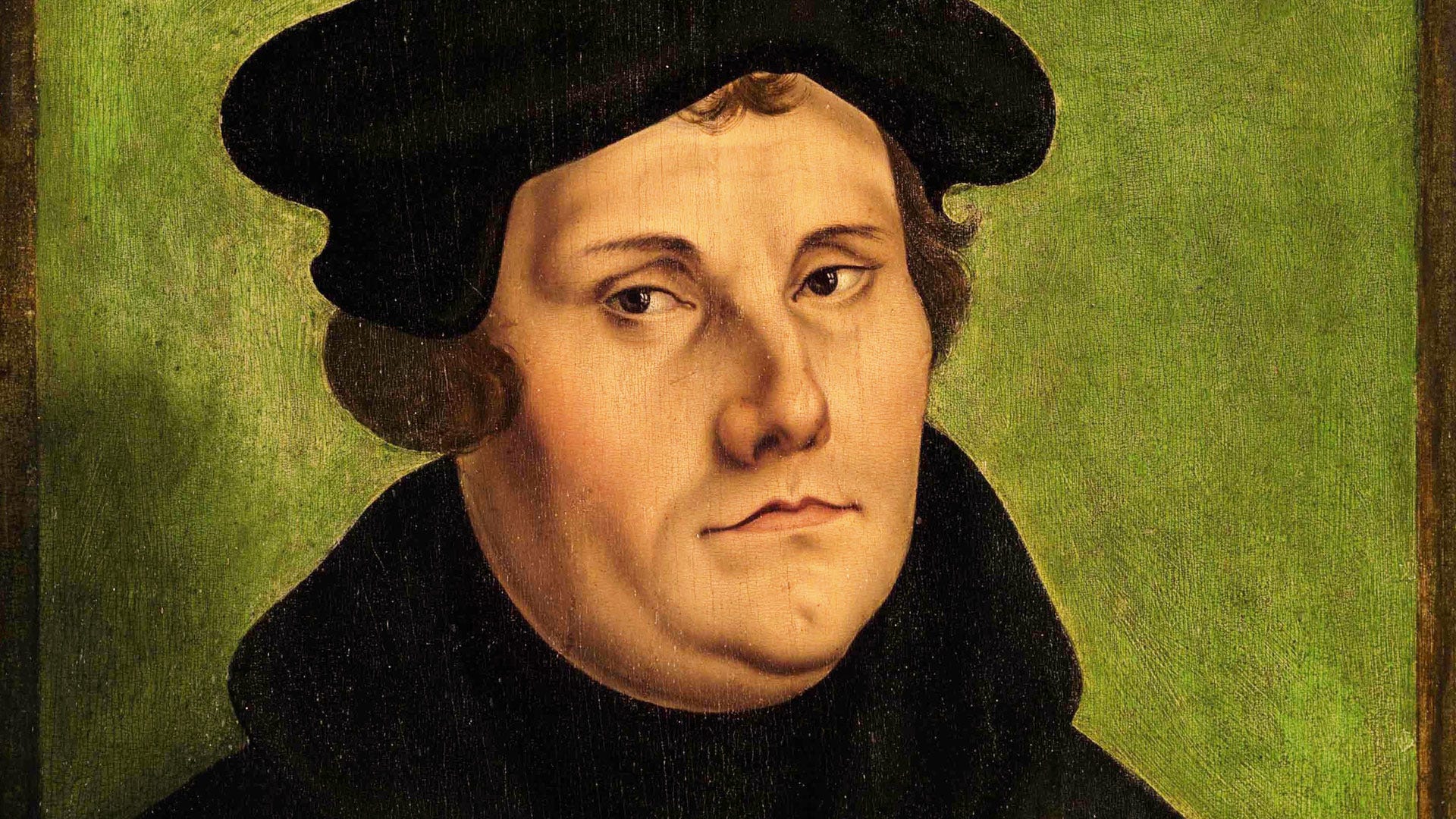
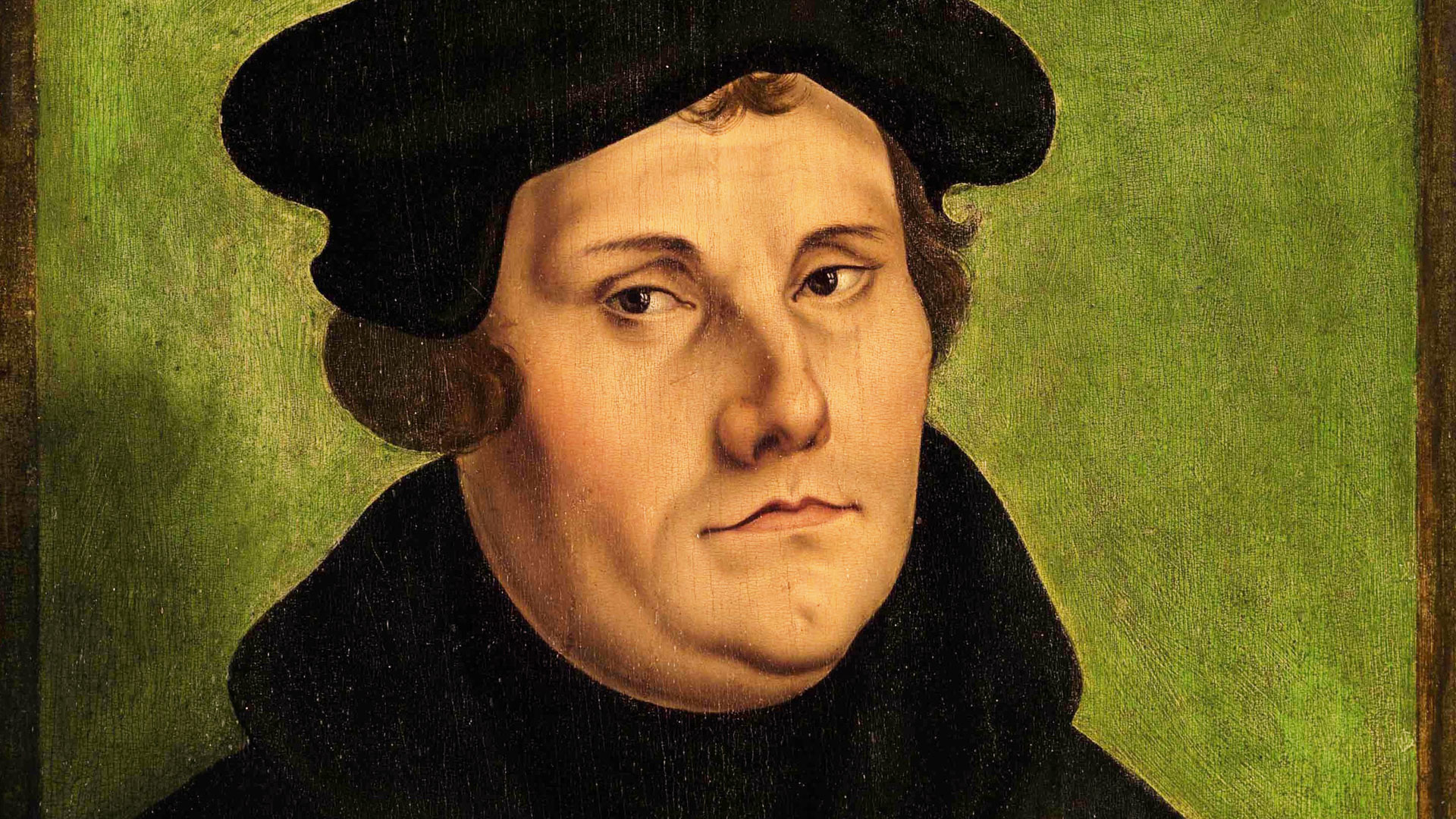
Martin Luther and the Protestant Reformation. (Image source)
From Yesterday- Would there ever be an end to the curse of Matthew 27? Did God sanction the Catholic Church to act as judge, jury, and executioner on His behalf? Or was this more like the days of Saul (Paul) before he converted to Christianity and erroneously pursued Christians in the name of God?
Was this how the Church was supposed to show “love” to their enemies?
It Wasn’t Just the Catholics…
The hunt for heretics began in 1478 AD at the hands of Ferdinand II of Aragon and Isabella I of Castile, the Catholic monarchs of Spain. For almost 40 years, the Catholic Church of Spain had the blessing of the Pope to violently force heretics - including Jews - to convert to Catholicism or potentially face death.
When the Protestant Reformation (1517–1648), began, many throughout Europe left the Catholic Church and began converting to the Protestant religion. Bibles were now becoming available to commoners due to the advent of the printing press (1440 AD), and the elites of the Catholic Church began losing their power. Lay people read Scripture for the first time for themselves and began questioning the authority of the Catholic Church’s teaching.
The Reformation was originally intended to reform the corruption embedded in the Catholic hierarchy, but instead of humbly repenting, the Pope and Catholic Church hierarchy doubled down.
The Reformation and the Jews
“By this we know that we love the children of God, when we love God and keep His commandments.”(1 John 5:2)
The Reformation began reshaping the cultural landscape in Europe as many were trying to understand Christianity based on Scripture alone (sola scriptura). This was in opposition to the Catholic beliefs that the Pope’s Words were on par with Scripture (many Catholic traditions are not supported by the teachings in the Bible) and that laypeople had no ability to understand God’s Word.
In the beginning, Martin Luther had hoped that Jews would convert to Protestantism, but his attitude toward Jews became increasingly hostile as his life and ministry progressed and Jewish conversions were sparse.
In the early years of the Reformation, Luther had hoped that Jews might be open to Protestant teachings since it was an effort to go back to what the Apostles originally taught, as well as the simple teaching of the first Apostolic Creed and the gospel of Christ.
Luther’s version of Protestantism
“The fear of the Lord is to hate evil; Pride and arrogance and the evil way And the perverse mouth I hate.”(Proverbs 8:13)
By the 1530s, Luther became increasingly impatient with the Jews for not converting to Protestant Christianity. In his 1543 pamphlet "On the Jews and Their Lies,” he wrote the following:
[The Jews] they are nothing but thieves and robbers who daily eat no morsel and wear no thread of clothing which they have not stolen and pilfered from us by means of their accursed usury ... What shall we Christians do with this rejected and condemned people, the Jews? I shall give you my sincere advice:
First, to set fire to their synagogues or schools and to bury and cover with dirt whatever will not burn, so that no man will ever again see a stone or cinder of them. This is to be done in honor of our Lord and of Christendom, so that God might see that we are Christians.
Second, I advise that their houses also be razed and destroyed. ....
Third, I advise that all their prayer books and Talmudic writings, in which such idolatry, lies, cursing, and blasphemy are taught, be taken from them ...
Fourth, I advise that their rabbis be forbidden to teach henceforth on pain of loss of life and limb ...
Fifth, I advise that safe-conduct on the highways be abolished completely for the Jews. ....
Sixth, I advise that usury be prohibited to them, and that all cash and treasure of silver and gold be taken from them and put aside for safekeeping. .... they remain our daily murderers and bloodthirsty foes in their hearts.
Their prayers and curses furnish evidence of that, as do the many stories which relate their torturing of children and all sorts of crimes for which they have often been burned at the stake or banished. .... let us emulate the common sense of other nations such as France, Spain, Bohemia, etc., compute with them how much their usury has extorted from us, divide, divide this amicably, but then eject them forever from the country .... so that you and we all can be rid of the unbearable, devilish burden of the Jews ... With this faithful counsel and warning I wish to cleanse and exonerate my conscience. (Martin Luther, The Jews and Their Lies)
Luther called for the expulsion of Jews from the “Christian” lands, the destruction of their synagogues and homes, and the confiscation of their Hebrew writings. This had a lasting and damaging impact on attitudes toward Jews, especially in German-speaking lands. This was similar to the Catholic’s treatment of Jews in Germany (as we read yesterday - especially in Worms, Germany).
Luther’s writings were influential in shaping early Protestant attitudes toward Jews in regions where Protestantism spread. Luther’s views weren’t held by all protestants, however. Some, thankfully held to the approach of Paul in ministry:
“We give no offense in anything, that our ministry may not be blamed. But in all things we commend ourselves as ministers of God: in much patience, in tribulations, in needs, in distresses, in stripes, in imprisonments, in tumults, in labors, in sleeplessness, in fastings; by purity, by knowledge, by longsuffering, by kindness, by the Holy Spirit, by sincere love, by the word of truth, by the power of God, by the armor of righteousness on the right hand and on the left, by honor and dishonor, by evil report and good report; as deceivers, and yettrue; as unknown, and yet well known; as dying, and behold we live; as chastened, and yet not killed; as sorrowful, yet always rejoicing; as poor, yet making many rich; as having nothing, and yet possessing all things.”(2 Corinthians 6:3-10)
In Europe, the Hatred of Jews seemed dominant
Some Protestant rulers, especially in areas that were more tolerant, were willing to offer some protection to Jews, but in Europe, it seems that the hatred of Jews prevailed.
The Reformation was a Christian movement, but it also had political implications as well. The treatment of Jews during the early Reformation period was often tied to the policies of the converted Protestant princes and rulers who were navigating the new religious changes in their territories.
The Reformation had little direct impact on Jews in Spain and Italy where Catholicism was deeply embedded and remains so today. The centuries-long beliefs of Catholic elites remained hostile as influential leaders continued to promote harsh treatment of Jews.
When the Catholic Church doubled down on their theology after the Reformation failed to “reform” it, The Catholic Church cemented their own theology in the “Trent Reforms” (1545–1563). They maintained the status of all heretics, and would continue their bias of social marginalization, forced conversions, and expulsions of the Jews.
Some Protestant reformers hoped that Jews might convert to Christianity, as Luther had originally hoped, but as time went on, these hopes waned, and Jews were increasingly viewed with suspicion in many Protestant circles (just as it did in Catholic ones). This time period seeded an undercurrent of antisemitism in both Catholicism and in Protestantism as both theologies carried out their “holy” agendas.
Not all Protestants agreed with Luther
Some Protestant thinkers, especially in the late 1600s, held a belief in “restorationism,” interpreting prophecies in the Bible that saw the return of Jews to the Holy Land as a key event in God's plan for the end of days. This belief was linked to the idea of the second coming of Christ and the final fulfillment of biblical prophecy.
“When I scatter them among the peoples, They will remember Me in far countries, And they with their children will live and come back.”(Zechariah 10:9)
James Ussher (1581–1656), an Anglican Archbishop in Ireland, was one of the early Protestant leaders who taught that Jews had a divinely ordained role in the fulfillment of biblical prophecy. Ussher believed that the eventual return of Jews to the Holy Land was an important sign in Christian eschatology. This of course is in opposition to the Catholic Amillennialist view of eschatology that we looked at in earlier studies.
English Puritans and other Protestant groups were supportive of the idea of Jewish restoration believing the Bible taught that there would be a literal 1000 year reign of Christ in an earthly Kingdom and the Jews would play a part.
The belief in the return of Jews to the Holy Land began to gain prominence in the 1600s, which supported the Christian Zionist movement that would become more pronounced in the 19th and 20th centuries as more prophecies were fulfilled and people’s Biblical knowledge increased.
Persecution continues
The most significant forms of persecution of Jews during the Reformation came from Catholic authorities who continued to employ medieval practices. In some regions, Jews were confined to ghettos. And in some areas of Catholic Europe, especially Spain and Portugal, Jews were still being forced to convert to Christianity or face expulsion.
The Protestant Reformation didn’t reform these Catholic practices, but instead, added new layers of complexity to the religious landscape in places like Germany and the Netherlands, where Protestant ideas challenged Catholic dominance, but did not necessarily lead to more favorable treatment of Jews.
“By this all will know that you are My disciples, if you have love for one another.”(John 13:35)
If you love one another?
There are great forces of evil afoot in the Christian Church and, as we have seen, one of these was the way that both Church systems dealt with those who refused to conform.
As we have seen, however, not all Christians during these transitional years were anti-Semitic. In fact, the ones who supported the Jews saw them as holding a very special role in the end times (as we read in an earlier study).
The widespread attitude held by the Pope and Catholic teaching, along with some of the vocal early Protestant reformers - who also despised Jews - created a root of antisemitism that would soon boil over into a Church-sanctioned destruction of Jews all over Europe.
To be continued…
“I will strengthen the house of Judah, And I will save the house of Joseph, And I will bring them back, Because I have had compassion on them; And they will be as though I had not rejected them, For I am the Lord their God and I will answer them.”(Zechariah 10:6)
Today’s Question

Verses to Explore
“Return it to its sheath. I will judge you In the place where you were created, In the land of your nativity.”(Ezekiel 21:30)
“Love suffers long and is kind; love does not envy; love does not parade itself, is not puffed up; does not behave rudely, does not seek its own, is not provoked, thinks no evil; does not rejoice in iniquity, but rejoices in the truth; bears all things, believes all things, hopes all things, endures all things.”(1 Corinthians 13:4-7)
Today’s Prayer
Father today many of us celebrate a day of Thanksgiving and gratitude. We are reminded of these days when the Reformation took place and how it directly impacted the founding of our nation and that first Thanksgiving.
I know that history is often eulogized by those who have control of the narrative, but we can be certain of the fact that you know what the truth was in those early colonial years. You know all the biases towards your elect and all the hatred towards those who wanted to understand the truth of your Word. You also know the hearts of men and women who genuinely wanted to bring a message of hope and truth to this new world.
Today I am grateful for the courage it took to break free from the tyranny of the oppressive church and state in order to seek freedom of religion.
I know that there is a darkness to our history that remains hidden, but you are the God of light and will expose it all. Today I am thankful that your truth and your love will always prevail.
I’m also personally thankful today for my family. Although some of us can’t be as close as I would like, I love them deeply and am so grateful beyond words that they know you. And I’m so very grateful for the Godly husband you have given me, and all the years gone by when we were all together as a family. I have wonderful memories from these days and am so grateful.
I pray today as people get together with loved ones that they come to truly appreciate the importance of the family unit. Family is your plan and will for us. I’m so grateful that I had a mom and dad who loved me and took me to church. And I’m grateful that they planted a seed in my heart that has led me to where I am today. I thank you Father for life! May all honor and glory be yours. Amen.❤️